

Digital Pedagogy Position Paper
Personal Philosophy of Technology Integration in Education
Introduction
In contemporary education, digital technologies have become an increasingly important part of teaching and learning. Classrooms are no longer limited to traditional textbooks and face-to-face instruction, as students now engage with information through online platforms, multimedia resources, collaborative technologies, and artificial intelligence (AI) tools. However, I believe that effective technology integration is not simply about using digital tools for the sake of innovation. Instead, digital technologies should be used purposefully, ethically, and inclusively to support meaningful learning experiences, student engagement, and critical thinking skills.
My philosophy of digital pedagogy is strongly influenced by the idea that technology should enhance teaching rather than replace teachers. I believe that educators play a central role in guiding students to use technologies critically, safely, and responsibly. While digital tools can improve access to information and create engaging learning environments, their effectiveness depends on thoughtful pedagogical design and alignment with learning goals. This perspective aligns closely with the TPACK framework developed by Mishra and Koehler (2006), which highlights the importance of integrating technological knowledge with pedagogical and content knowledge in effective teaching practice.
Technology Integration
The TPACK framework has shaped my understanding of how technology should be implemented in classrooms. I believe that successful technology integration occurs when teachers carefully consider how digital tools support curriculum outcomes and student understanding, rather than focusing only on the technology itself. For example, using AI tools such as ChatGPT can support differentiated instruction by providing alternative explanations, scaffolding student understanding, and adapting content to different literacy levels. However, the value of these tools depends on how they are used pedagogically. In my future classroom, I would aim to select technologies that genuinely improve learning opportunities and encourage active student participation.
My understanding of technology integration has also been influenced by the PIC-RAT framework, which encourages educators to evaluate whether technology merely replaces traditional practices or meaningfully transforms learning experiences (Kimmons et al., 2020). I believe that technology should move beyond substitution and instead amplify collaboration, creativity, and critical inquiry. For example, students using AI tools to evaluate misinformation or compare multiple sources are engaging in deeper learning processes than simply receiving information passively. This approach encourages students to become active participants in constructing knowledge rather than consumers of digital content.
Digital Literacy and Critical Thinking
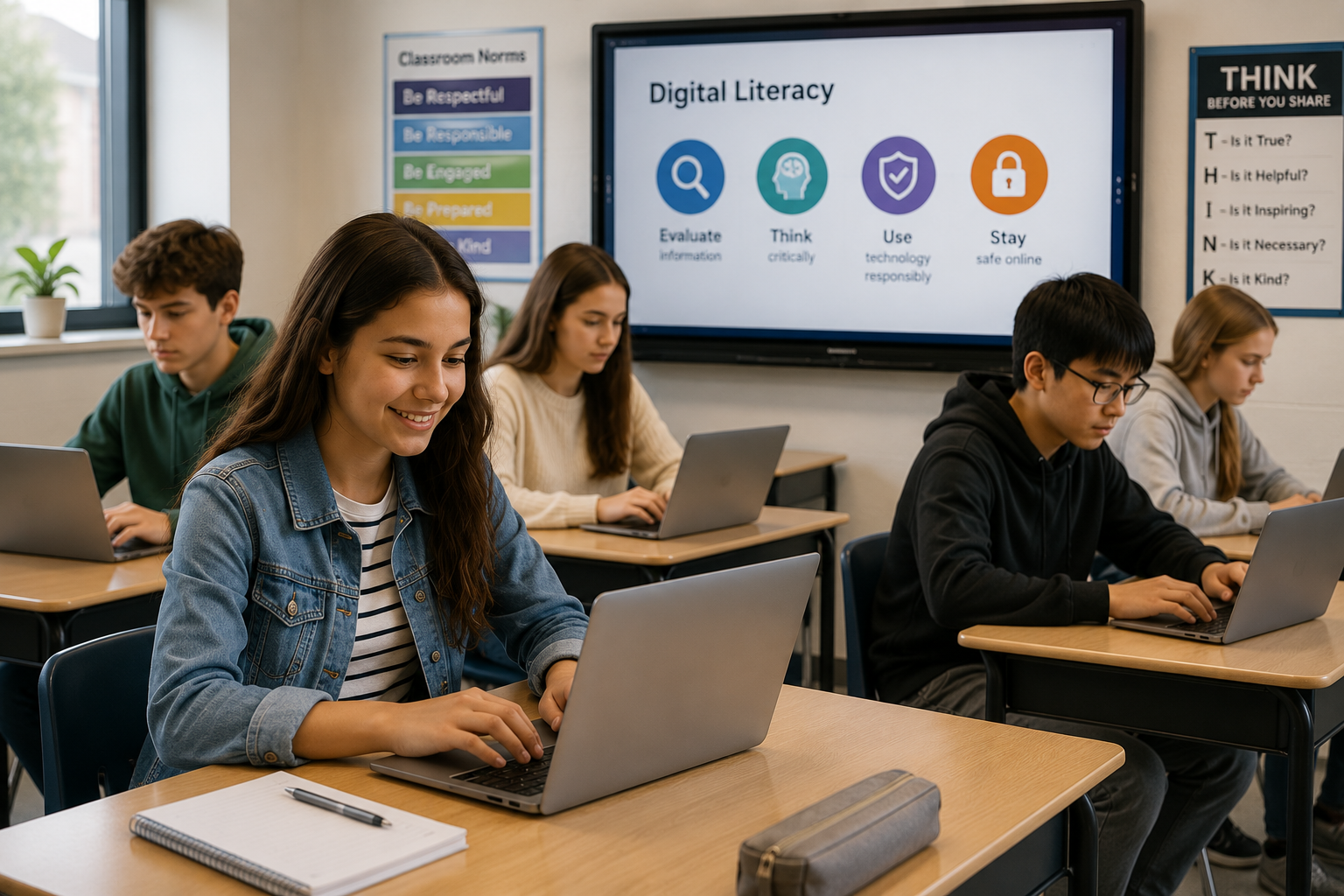
One of the most important aspects of digital pedagogy, in my view, is the development of digital literacy skills. Modern students are constantly exposed to online information, social media content, and AI-generated responses, making it essential for them to critically evaluate the reliability and accuracy of information. I believe schools have a responsibility to help students become informed and responsible digital citizens who can identify misinformation, recognise bias, and make evidence-based judgments. The Australian Curriculum identifies digital literacy as a key capability that supports students in navigating digital environments critically and responsibly (Australian Curriculum, Assessment and Reporting Authority [ACARA], n.d.).
This focus on digital literacy has become even more significant with the increasing use of AI technologies in education. While AI tools provide fast access to information and personalised support, they can also produce inaccurate or biased responses. Therefore, I believe students should be taught to question AI-generated content rather than automatically trust it. In practice, this means incorporating activities that encourage fact-checking, source comparison, and reflective thinking. For example, students could use AI tools to analyse an online article before verifying information through reliable external sources. Such activities support both critical thinking and responsible technology use.
Safety and Ethical Practice
Another key aspect of my digital pedagogy philosophy is the importance of ethical and safe technology use. Technology can create valuable learning opportunities, but it also introduces challenges related to privacy, online safety, misinformation, and digital wellbeing. I believe teachers must actively support students in developing safe online behaviours and understanding the ethical implications of technology use. Students should be taught not to share personal information online, to communicate respectfully in digital environments, and to recognise that AI systems may reflect biases present in training data.
I also believe that teachers have a professional responsibility to model ethical technology use. This includes critically evaluating digital tools before implementing them in classrooms and ensuring that technologies are age-appropriate, accessible, and aligned with educational goals. AI should support learning and creativity, but it should not replace teacher judgment, human interaction, or authentic student thinking. Maintaining a balance between innovation and responsible practice is essential for effective digital pedagogy.
Inclusive Learning
Inclusion and accessibility are also central to my philosophy of technology integration. I believe digital technologies have the potential to create more equitable learning environments by supporting diverse learning needs and increasing access to educational content. Features such as text-to-speech tools, captioned videos, translation tools, and AI-generated explanations can support students with different literacy levels, language backgrounds, or learning needs. This aligns with inclusive digital learning principles explored throughout the unit.
In my future teaching practice, I aim to create learning environments where technology supports flexibility, engagement, and student agency. I want students to use digital tools not only to access information but also to collaborate, create, communicate, and think critically. At the same time, I recognise that technology is not inherently effective on its own. The quality of learning depends on thoughtful pedagogical choices, clear learning intentions, and strong teacher guidance.
Overall, my philosophy of digital pedagogy is grounded in the belief that technology should be used purposefully, ethically, and inclusively to enhance learning experiences and prepare students for participation in an increasingly digital world. Frameworks such as TPACK and PIC-RAT have helped shape my understanding of meaningful technology integration, while the unit has reinforced the importance of digital literacy, safety, accessibility, and critical thinking. As a future educator, I aim to use technology in ways that empower students, support diverse learning needs, and encourage thoughtful engagement with digital information rather than passive consumption.
Create Your Own Website With Webador